Quick answer
What is a customer rating system?
With a customer rating system, customers score a product, service or overall experience on a simple scale, such as 1 to 5 stars, a numerical score, thumbs up or down, or emojis. Collected in a structured way, these ratings show businesses where customers are satisfied and where to improve, and help build trust.

In this article (6 sections)
Ratings are the quickest form of feedback to give and the easiest to compare. This guide explains why a customer rating system matters, how it works from collection to action, the main rating formats and their trade-offs, and the benefits for a business.
Importance of a Customer Rating System
1. Measures Customer Satisfaction
A customer rating system acts as a thermometer for your offerings, showing whether customers find your products or services satisfactory and how that changes over time.
2. Builds Customer Trust
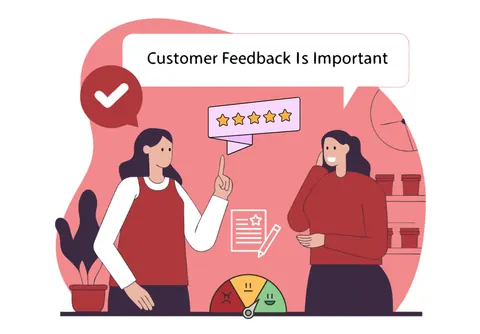
When customers are invited to rate their experiences, they feel heard and valued. A transparent service rating system encourages open communication, showing that a business genuinely cares about its customers’ opinions. Over time, this builds loyalty and trust.
3. Improves Products and Services
The insights gained from a customer rating system directly inform product and service development. By analyzing feedback, businesses can identify which features customers love and which need enhancement. For example, if customers repeatedly mention poor delivery times, the company can prioritize optimizing its logistics.
4. Supports Strategic Decision-Making
A robust customer rating system provides actionable data that can guide critical business decisions. For instance, consistently high ratings for a product may indicate it’s time to scale production or expand its availability. Conversely, poor ratings might suggest the need for a product redesign or discontinuation.
5. Enhances Market Competitiveness
A highly rated product or service attracts new customers and gives the business a competitive edge, because ratings and reviews influence buying decisions.
6. Drives Innovation
Customer ratings often shed light on unmet needs or emerging trends. For example, a restaurant might discover through ratings that customers want more plant-based options on the menu. This insight can inspire innovation, keeping the business ahead of industry trends.
How Does a Customer Rating System Work?
A customer rating system works in three steps:
1. Collection of Ratings
Customers rate their experience using a scale such as:
- Star ratings (e.g., 1 to 5 stars).
- Numerical scales (e.g., 1 to 10 or percentage scores).
- Emoji-based systems, where customers can select an emoji that reflects their satisfaction level.
2. Data Aggregation
Once ratings are collected, the next step is to compile and organize the feedback. This process is often automated using software or tools that sort the data into clear, actionable categories. For instance:
- Average customer satisfaction scores for a specific product or service.
- Trends in feedback over time, such as improving or declining customer satisfaction levels.
- Segmentation by demographics or location allows businesses to understand patterns among different customer groups.
3. Actionable Insights
The most important step is turning the data into action: analysing trends, pinpointing pain points and responding. This can include:
- Improving specific services or processes (e.g., faster customer support response times).
- Refining products to meet customer preferences (e.g., fixing a feature that received low ratings).
- Implementing personalized follow-ups, such as reaching out to dissatisfied customers with resolutions.
Types of Customer Rating Systems
The format you choose affects how easy ratings are to give and how much detail they carry:
1. Star Rating Systems
The star rating system is one of the most recognizable and widely used formats. Customers rate a product or service by selecting stars, typically on a scale from 1 to 5, where 1 indicates poor satisfaction and 5 represents excellent satisfaction.
This system is popular for its simplicity and ease of use. Businesses like Amazon and Yelp extensively use star ratings, making it easy for users to understand the level of satisfaction at a glance.
2. Numerical Scales
Numerical scales provide more precise feedback by allowing customers to rate their experience on a broader satisfactory scale, such as 1-10 or 1-100. This format is particularly useful for businesses that need detailed data for performance analysis.
For example, a survey might ask, “How satisfied were you with our service?” Customers can choose a number, such as 7 out of 10, to represent their level of satisfaction.
3. Thumbs Up/Down
The thumbs-up or thumbs-down rating system is a quick and straightforward way for customers to provide feedback. With just two options, this system allows businesses to gauge whether customers found their experience positive or negative without requiring complex input.
It is widely used in platforms like YouTube or Netflix to measure product interest and engagement. The simplicity of this method makes it ideal for mobile apps or scenarios where time is limited, though it lacks the nuanced data provided by other systems.
4. Emoji-Based Ratings
Emoji-based systems have become increasingly popular due to their fun and visual appeal. Customers select an emoji that best represents their feelings, such as a smiling face for satisfaction or a frowning face for dissatisfaction.
This system is especially effective for engaging younger audiences or users on digital platforms. Its intuitive nature simplifies the feedback process while still capturing the service rating.
5. Net Promoter Score (NPS)
The Net Promoter Score (NPS) is a specific type of numerical rating system designed to measure customer loyalty and likelihood of recommendation. Customers answer the question, “How likely are you to recommend our product/service to others?” on a scale from 0 to 10.
The score is the percentage of promoters minus the percentage of detractors:
- Scores of 9-10: Promoters (highly satisfied customers likely to recommend).
- Scores of 7-8: Passives (satisfied but not enthusiastic).
- Scores of 0-6: Detractors (unhappy customers who may discourage others).
Benefits of a Customer Rating System
1. Enhanced Customer Insights
A customer rating system gives businesses a direct understanding of their customer’s level of satisfaction. By analyzing ratings, companies can identify what works well and what needs improvement.
2. Boosted Customer Retention
Satisfied customers are more likely to stay loyal. A customer rating system enables businesses to track and address feedback promptly, resolving issues before they escalate. When customers see that their input leads to actionable changes, they feel valued and appreciated.
3. Increased Product Interest
Positive ratings and reviews serve as powerful endorsements. When potential customers see high ratings for a product or service, it increases their product interest and confidence in making a purchase.
4. Reputation Management
A customer rating system is a cornerstone of building and maintaining a strong brand reputation. Online ratings on platforms like Google Reviews or Yelp demonstrate transparency and reliability. Customers are more likely to trust a business with visible, positive feedback.
Ratings tell you how satisfied customers are; comments and follow-up tell you why. Our guide to customer feedback management covers turning both into improvements.
Conclusion
A customer rating system turns satisfaction into a number you can track, compare and act on. Choose a format that suits your customers, from simple stars or emojis to NPS, pair ratings with a chance to comment, and follow up on low scores quickly.
Frequently Asked Questions
What’s A Good Rate Of Customer Satisfaction?
A good service rating typically ranges from 4 to 5 stars or a score of 80% or higher on a satisfactory scale. This indicates high product interest and happy customers.
How Does A Customer Rating System Improve Service?
It identifies strengths and weaknesses, allowing businesses to focus on improving service rating and addressing customer needs effectively.
What Is The Best Customer Rating Scale?
The best scale depends on the audience. Star ratings or NPS are user-friendly and widely understood.
Why Do Customers Give Low Ratings?
Low ratings often stem from unmet expectations or poor levels of satisfaction with service or product quality.
How Can I Increase Customer Ratings?
Focus on customer support, deliver quality services, and follow up on complaints to enhance customer satisfaction levels.
Filed under Feedback Management · First published