Quick answer
What is enterprise feedback management (EFM)?
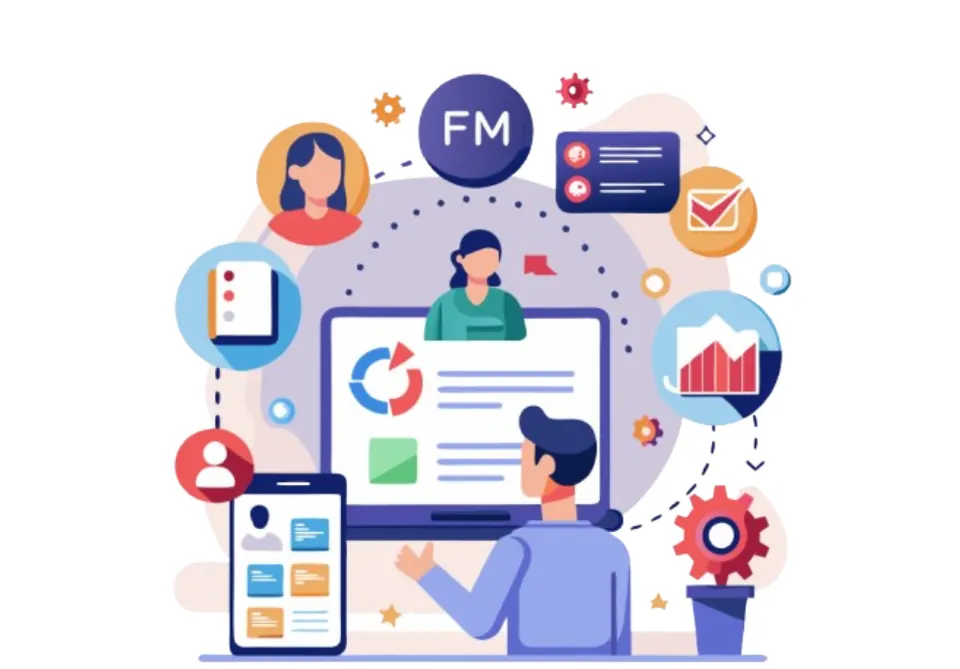
Enterprise feedback management (EFM) is a centralised system that collects and manages feedback from customers, employees and other stakeholders across channels such as online surveys, social media, email, mobile apps and website chatbots. EFM software organises and analyses this data so organisations can act on it to improve satisfaction, engagement and performance.
In this article (13 sections)
- What Is Enterprise Feedback Management?
- Importance Of Enterprise Feedback Management
- Impact Of Enterprise Feedback Management On Different Industries
- Usage Of Enterprise Feedback Management Tools
- Types Of Enterprise Feedback Management Solutions
- How Does Enterprise Feedback Management Work?
- Choosing the Best Enterprise Feedback Management Platform
- Benefits of Implementing An Enterprise Feedback Management
- Best Practices for Using Enterprise Feedback Management Systems
- Challenges In Implementing Enterprise Feedback Management
- How to Measure the ROI of Enterprise Feedback Management
- Conclusion
- Frequently Asked Questions
Enterprise feedback management becomes necessary when feedback arrives from many places at once: dozens of branches, several departments, and customers, employees and partners. This guide explains how EFM differs from customer feedback management, how enterprise feedback management software works across an organisation, what to look for when buying a platform, and how to measure its return.
What Is Enterprise Feedback Management?
EFM applies the same collect, analyse and act cycle as customer feedback management, but at the scale of a whole organisation. The difference is mostly one of scope:
| Aspect | Customer feedback management | Enterprise feedback management |
|---|---|---|
| Who gives feedback | Mainly customers | Customers, employees, partners and other stakeholders |
| Where it comes from | A business's main touchpoints | Every location, department and channel of the organisation |
| Who uses the insights | Customer-facing teams | Branch managers, regional heads, head office and functions such as HR and operations |
| What the software must handle | Collection, analysis and replies | All of that, plus cross-location comparison, role-based access, escalation and integration with enterprise systems |
Importance Of Enterprise Feedback Management
In a large organisation, feedback is easily trapped in silos: one branch's complaints never reach head office, and HR's employee survey is never compared with customer comments from the same location. EFM puts it all in one system, so leadership can see which locations and services are improving or slipping, act on recurring problems at their source and decide where to invest. The underlying business case for listening to customers is set out in why customer feedback is important.
Impact Of Enterprise Feedback Management On Different Industries
EFM is most useful in sectors with many sites or service points:
- Retail: comparing the shopping experience across stores and online.
- Hospitality: monitoring guest satisfaction and service quality across hotels and restaurants.
- Healthcare: tracking patient experience by hospital, department and service.
- Financial services: monitoring customer sentiment across branches and service channels.
- Technology: combining user feedback from products, support and sales to address issues quickly.
Usage Of Enterprise Feedback Management Tools
- Survey creation: build tailored surveys and distribute them by email, SMS, website, app or QR code.
- Targeted delivery: send surveys to specific segments, automatically, at key moments in the customer or employee journey.
- Automated responses: send personalised replies based on how someone answered.
- Data analysis: detect patterns and trends, and in advanced tools, predict future issues.
- Centralised analytics: keep all feedback data in one place where stakeholders can review it.
Types Of Enterprise Feedback Management Solutions
- Surveys and Questionnaires: The most common EFM tools, offering structured feedback for quantitative analysis.
- Social Media Monitoring: Captures real-time feedback on social platforms, giving insights into customer sentiment.
- Customer Service Interaction Tracking: Records feedback from customer service channels, providing a deeper understanding of customer pain points.
- Product and Service Reviews: Tracks customer satisfaction with specific products or services to pinpoint areas for improvement.
How Does Enterprise Feedback Management Work?
- Data collection: feedback is gathered from every source, such as online surveys, social media, customer support, website forms, in-app feedback, online reviews and QR codes at each site, with each response tagged by location, department and channel.
- Data management: the platform acts as a central hub that categorises feedback by topic, stores it securely and filters out duplicates and irrelevant responses.
- Data analysis: sentiment analysis identifies tone, trend analysis spots recurring themes over time, and correlation analysis links feedback with outcomes such as sales or retention.
- Routing and escalation: urgent issues go straight to the responsible branch or team, and unresolved ones escalate to the next level.
- Insight and benchmarking: leaders compare locations and departments, identify strengths to reinforce and find where the organisation is underperforming.
- Response and follow-up: teams acknowledge feedback, implement changes and check whether those changes solved the problem.
Choosing the Best Enterprise Feedback Management Platform
Most feedback tools can run a survey. What separates enterprise feedback management software is how well it handles many locations, many users and sensitive data. Check each platform against these criteria:
- Multi-channel collection: surveys, forms, QR codes, SMS and email, so you can reach customers and employees where they are.
- Location and department tagging: every response should arrive already tagged by where it came from, without staff entering it by hand.
- Cross-location dashboards: branch-by-branch comparison and benchmarking, with drill-down into each location's metrics.
- Role-based access: branch managers, regional heads and executives should each see the data relevant to them, and nothing more.
- Real-time alerts and escalation: urgent issues should reach the responsible team at once and escalate automatically if they are not resolved.
- Integration: connections to existing systems such as CRM, ERP or HR software keep data consistent.
- Flexible reporting and automation: customisable reports and automated workflows that save staff time.
- Scalability: the platform should handle more locations, users and responses as the organisation grows.
- Ease of use: a simple interface for frontline staff, who are the ones who must act on most feedback.
- Data security and retention: encryption, access logs and clear rules on how long feedback history is kept. See confidentiality and security in feedback systems.
Before signing, ask each vendor how pricing scales (by location, user, response or SMS volume), how long setup takes for your number of sites, and whether you can run a pilot in a few locations first. For a side-by-side look at individual tools, see our comparison of customer feedback management tools.
Benefits of Implementing An Enterprise Feedback Management
- Improved customer satisfaction: Regularly addressing customer feedback can improve satisfaction and retention.
- Data-driven decision-making: Access to clear, organized feedback data helps managers make more informed business decisions.
- Enhanced product development: Feedback from users can inspire new features, products, or improvements to existing offerings.
- Higher employee engagement: Employee feedback systems give workers a voice, improving workplace morale and engagement.
- Consistent standards across locations: comparing branches shows where service falls below the organisation's standard and which practices to copy from top performers.
Best Practices for Using Enterprise Feedback Management Systems
- Encourage Regular Feedback: Create an environment where customers and employees feel comfortable sharing feedback.
- Act on Insights Quickly: Timely responses to feedback show customers you value their input.
- Use the same questions and scale everywhere, so locations can be compared fairly.
- Personalize the Experience: Use feedback to personalize interactions with customers, making them feel valued.
- Monitor Trends Over Time: Track changes in feedback to understand how customer expectations evolve.
Challenges In Implementing Enterprise Feedback Management
- Data overload: Managing and analyzing a large volume of feedback can be overwhelming without the right systems in place.
- Ensuring participation: Encouraging customers or employees to provide feedback consistently can be challenging.
- Integrating with existing systems: Ensuring seamless integration with existing tools or platforms is crucial for effective feedback management.
- Bias in feedback: Sometimes feedback may not be fully representative of the entire customer or employee base, leading to skewed insights.
How to Measure the ROI of Enterprise Feedback Management
An EFM system is an investment, so it helps to show what it returns. The value usually comes from four areas:
- Customer loyalty: understanding customer needs and solving problems quickly keeps customers coming back.
- Lower employee turnover: when employees can share feedback and feel valued, fewer of them leave, which saves hiring and training costs.
- Efficiency: automating feedback collection saves time and money and speeds up decisions.
- New opportunities: feedback reveals customer needs that can lead to new products or services and new revenue.
Metrics to Track
- Customer retention: how many customers stay loyal once the system is in use.
- Employee turnover: whether fewer employees leave the organization.
- Efficiency: the time and money saved by automating feedback tasks.
- Additional gains: a better reputation as satisfied customers leave good reviews, and higher employee satisfaction as staff see they are being listened to.
To estimate ROI, compare the total benefits, such as increased revenue, improved customer retention and cost savings, with the total cost of the system, including upfront, integration and ongoing costs.
Returns are higher when feedback is shared across departments. Marketing, HR and operations can each use the same insights to improve their part of the business, rather than feedback staying with one team.
LazyMonkey's enterprise feedback management platform is one example built for multi-location organisations: each branch, department and service point gets its own QR code, feedback appears on a single dashboard with branch benchmarking, access is managed by role, and unresolved issues escalate automatically.
Conclusion
Enterprise feedback management brings feedback from every location, department and stakeholder group into one system. When choosing software, look past survey features to location tagging, cross-location dashboards, role-based access, escalation and security, and pilot the platform in a few sites before rolling it out.
Frequently Asked Questions
What Are The Key Features Of An EFM?
Multi-channel feedback collection, real-time analytics, customizable reporting, and automation.
How Does EFM Improve Customer Experience?
EFM helps identify customer pain points and implement changes to enhance satisfaction.
Why Is Feedback Important For Businesses?
Feedback provides insights that help companies improve products, services, and customer relationships
Which Industries Benefit From EFM Systems?
Industries such as retail, healthcare, hospitality, financial services, and technology benefit from EFM.
How Do You Measure the ROI of EFM?
Track customer retention, employee turnover and the time and money saved by automating feedback tasks. Then compare the total benefits, such as increased revenue, retention and cost savings, with the system's upfront and ongoing costs.
How Does EFM Help Reduce Employee Turnover?
An EFM system gives employees a way to share feedback and feel valued. Employees who feel heard are less likely to leave, which saves hiring and training costs.
Can EFM Help Create New Products or Services?
Yes. Feedback collected through EFM reveals customer needs and trends that can guide the development of new products or services.
Filed under Feedback Management · First published