Quick answer
What is a guard tour system?
A guard tour system records and verifies security patrols. Checkpoints are fixed along a route, the guard records each one with a wand, NFC tap or QR scan, and the system compares time-stamped records with the schedule to show completed, late and missed rounds. Modern systems also capture observations, photos and missed-round alerts.
In this article (10 sections)
- What Is a Guard Tour System?
- How a Guard Patrol System Works
- Types of Guard Tour Systems
- Guard Tour System Comparison
- What to Look for in a Guard Tour System
- How to Design Patrol Routes and Checkpoints for a Mall
- Common Guard Tour Pitfalls and How to Avoid Them
- Using LazyMonkey Checklists as a QR Guard Tour
- Conclusion
- Frequently Asked Questions
This guide is for mall security managers, facility heads and operations teams choosing or replacing a guard tour system. It explains how a guard patrol system works, compares the five main types on cost, proof and practicality, and lists the features that matter.
It then shows how to design patrol routes and checkpoints for a shopping mall, with a sample checkpoint list, and the pitfalls that make patrol data look good while rounds are skipped.
What Is a Guard Tour System?
Guard tour system, guard patrol system and patrol tour system are names for the same thing. It verifies patrols; it does not set what a guard does at each post, which belongs in post orders and security SOPs (see our guide to security guard duties and responsibilities). Older systems only proved presence, so when you compare products, check how much they capture beyond the scan.
How a Guard Patrol System Works
- Checkpoints are installed where checks matter: fire exits, plant rooms, roof doors, the loading bay, parking levels.
- Routes and schedules are set: which checkpoints make up a round, how often it runs, and the time window for each.
- The guard records each checkpoint by touching, tapping or scanning it, and notes any observation.
- Data reaches the system, in real time from a phone or when a wand is docked at shift end.
- Exceptions are flagged: missed checkpoints, late rounds, checkpoints recorded out of order or too fast.
- Supervisors act: follow up on misses and findings, and review completion by guard, route and shift.
Types of Guard Tour Systems
RFID and iButton wand systems
The guard touches a rugged handheld reader, often called a wand or baton, to an RFID tag or iButton contact button at each checkpoint. The wand stores each time-stamped read and is docked to download the data, though some models send it over a mobile network. Wands are tough, have long battery life and work without mobile signal, but readers cost more, data is often seen only after the shift, and the guard cannot easily report what they found.
NFC tags with a smartphone
The guard taps an NFC tag at each checkpoint with a phone. The NFC Forum describes a typical range of up to 2 cm, so a tap is good evidence the phone was at the tag. Tags are cheap, but every guard needs an NFC phone with an app.
QR code checkpoints on a smartphone
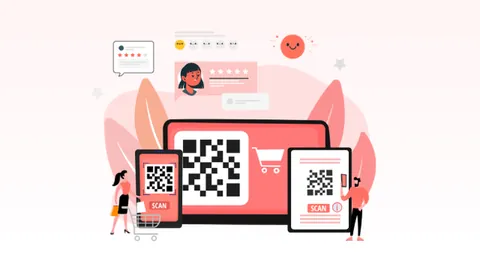
A printed QR code at each checkpoint is scanned with any phone camera, and moving a checkpoint means printing a new label. A QR code can be photographed and scanned from the photo, so QR systems need a second check, such as location or a time window.
GPS and geofence tracking
The phone's location is recorded along the route or checked against a geofence. This suits open sites such as parking lots and perimeters but is weak indoors: GPS.gov notes that smartphone accuracy of about 4.9 metres in open sky worsens near buildings, and Android's developer guidance recommends a geofence radius of at least 100 to 150 metres. In a mall, a geofence proves the guard was at the property, not at a specific fire exit on the third floor.
Bluetooth beacons
Battery-powered beacons are detected by the guard's phone within range, with no tap or scan. They work indoors and show approximate position in real time, but need battery changes, range varies with walls and crowds, and a guard can pass through range without checking the spot.
Guard Tour System Comparison
Ratings are relative; actual cost and performance depend on the vendor and your site.
| Type | Hardware cost | Proof of presence | Data | Ease of change | Best mall use |
|---|---|---|---|---|---|
| RFID or iButton wand | High | Strong (physical touch) | End of shift, unless networked | Moderate | Basements and plant rooms without signal |
| NFC on smartphone | Low; NFC phones needed | Strong (tap within centimetres) | Real time with signal | Easy | Most areas, if phones support NFC |
| QR code on smartphone | Very low | Moderate; strong with geofence and time window | Real time with signal | Very easy | Most areas, with anti-photo controls |
| GPS or geofence | None beyond phones | Weak indoors; good outdoors | Real time | Very easy | Parking and perimeter only |
| Bluetooth beacon | Moderate (batteries) | Moderate (proximity only) | Real time | Moderate | Live position tracking |
Many malls combine methods: phone-based QR or NFC checkpoints with a geofence for floors and parking, and a wand for deep basements with no signal.
What to Look for in a Guard Tour System
- Time windows: each round has a due time and window; a scan outside it counts as late or missed.
- Proof of presence: at least two signals, such as a scan plus location, or a tap plus a photo.
- Missed-round alerts while there is still time to act, not in next week's report.
- Observations at each checkpoint: checks, notes and photos, so a patrol records "fire exit 3B blocked by cartons", not just "scanned at 02:14".
- Issue raising and escalation to the right team when a problem is found.
- Reports by route, guard, shift and location, exportable for agency reviews.
- Behaviour without signal: test what happens to a scan in your basement before you buy.
- Ease of change: how quickly you can move a checkpoint or add a route during a sale or fit-out.
How to Design Patrol Routes and Checkpoints for a Mall
Start from risk, not the floor plan: escape routes, places a fire can start unseen, entry points that can be left open, and areas where people can hide after closing. Your fire safety checklist already lists exits and fire equipment.
- List risk points by floor: exits, plant rooms, roof access, the loading bay, service corridors, washrooms, parking and the perimeter.
- Group them into routes a guard can walk in 30 to 45 minutes, so one route fits within a round's window.
- Set frequency by period: public areas and exits in trading hours; shutters, back-of-house and the perimeter after closing, in line with your mall operations checklist.
- Write what to check at each checkpoint, so the scan opens a short list of questions, not a blank tick.
- Vary the sequence: fix the checkpoints and window, not the order.
- Review monthly: drop checkpoints that never find anything, add ones where incidents happen.
Sample mall checkpoint list
Frequencies are given as trading hours / after closing.
- Fire exit doors, each floor (every 2 hours / every round): door closes and opens from inside, route clear, exit sign lit.
- Staircase landings (every 2 hours / every round): no storage, no loitering, lights working.
- Loading bay (every hour / every round): shutters, gate passes, no unattended goods or stacked cartons.
- Electrical and DG rooms (twice per shift / every round): door locked, no smell of burning or fuel, no water ingress.
- Roof access door (once per shift / every round): locked, no signs of entry.
- Washroom corridors (every hour / once after closing): no one hiding, no unattended bags.
- Parking levels (every hour / every 2 hours): driveways clear, lighting, abandoned vehicles, fire equipment in place.
- Store shutters, each floor (first round after closing): down and locked, approved after-hours work only.
- Perimeter and service gates (every 2 hours / every round): gates locked, boundary intact, lighting.
These frequencies are a starting point, not a standard; set them from your own risk assessment and agency deployment.
Common Guard Tour Pitfalls and How to Avoid Them
- Predictable routes. If order and time never change, anyone watching knows where the guard will be.
- Photographed QR codes. A guard can photograph every code once and scan the photos from the security room. Require a location check and time window, ask for photos at key checkpoints, and replace labels periodically.
- Convenient checkpoints. A tag next to the security room proves little; put it at the far end of the space being checked.
- Scans without observations. A perfect completion report can sit beside a blocked fire exit.
- Nobody follows up exceptions. Alerts must reach someone who acts during the shift, as named in your escalation matrix.
- Too many checkpoints. A route that cannot be walked in its window will be faked.
- Dead zones. Test every checkpoint for signal before go-live, and use a method that stores data offline where there is none.
When a round turns up something serious, record it using our incident report format.
Using LazyMonkey Checklists as a QR Guard Tour
LazyMonkey Checklists can run patrols and night rounds as a QR-based guard tour:
- The checklist opens only after a QR scan at the checkpoint, within its time slot, with geofencing confirming location.
- Guards answer each item and add photos, signatures or readings.
- A missed slot alerts the right people; a failed item raises an issue that escalates until resolved.
- Because it runs on phones, test areas with no signal and consider a wand there.
Conclusion
A guard tour system is worth what it proves and what it gets fixed. For most malls, phone-based checkpoints with a second proof, observations and missed-round alerts beat presence-only scans, with wands kept for areas without signal. Design routes from risk, vary the order, and make sure every exception reaches someone who acts.
Frequently Asked Questions
What is a guard tour system used for?
It records and verifies security patrols. Guards record fixed checkpoints along a route, and the system compares the time-stamped records with the schedule to show which rounds were completed, late or missed.
What is the difference between a guard tour system and a guard patrol system?
There is no real difference. Guard tour system, guard patrol system and patrol tour system are different names for the same method of recording and verifying security rounds.
Which type of guard tour system is best for a shopping mall?
Most malls are best served by phone-based QR or NFC checkpoints with a second proof such as location and a time window, because they report observations and missed rounds in real time. Wand systems remain useful in basements and plant rooms without mobile signal.
Can guards cheat a QR code guard tour system?
A QR code alone can be photographed and scanned later, so it should be combined with a location check, a time window for each round and photos at key checkpoints, which make scanning from a copy much harder.
How many checkpoints should a mall patrol route have?
As many as a guard can check properly within the round's time window, usually a route of 30 to 45 minutes. Place them at risk points such as fire exits, plant rooms, the loading bay and parking, and review the list monthly.
Sources
- NFC Technology NFC Forum
- GPS Accuracy GPS.gov, US Government
- Create and monitor geofences Android Developers
Filed under Mall & Facility Operations · First published